
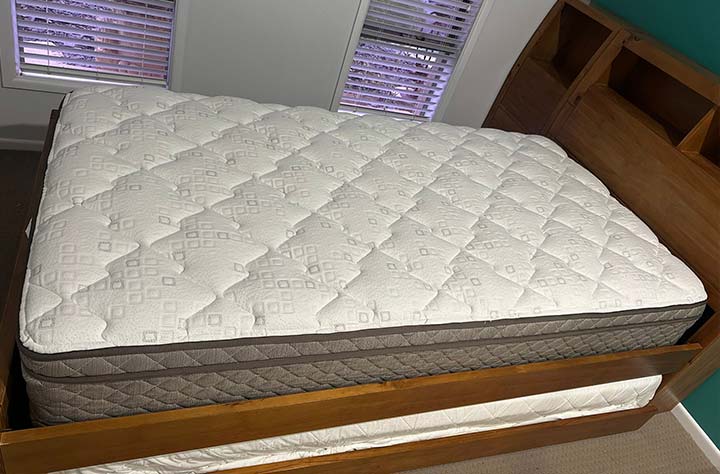
Your mattress still smells after cleaning because moisture, bacteria, or contaminants remain trapped deep inside the layers where surface cleaning could not reach them. The most common reasons are incomplete drying, urine or vomit that penetrated beyond the cleaning depth, mold that began growing in the damp interior, or cleaning products that masked odors temporarily without removing the source material. To fix this, you need to identify whether the smell is from leftover moisture, biological residue, or the cleaning process itself, then treat the root cause rather than the symptom.
You spent time and effort cleaning your mattress. You expected a fresh, neutral-smelling sleep surface. Instead, you are left with something that smells sour, musty, chemical, or just wrong. This is frustrating, but it is also fixable. Let's diagnose exactly what you are smelling, why it happened, and what to do about it now.
Step 1: Identify What Kind of Smell You Have
Different smells have different causes. Knowing what you are dealing with narrows the solution.
Sour or Musty Smell
This is almost certainly moisture that has not fully dried. The damp interior of the mattress is a breeding ground for mold and mildew. Even if the surface feels dry to the touch, the deeper foam or fiber layers can hold moisture for days. This is the most common post-cleaning odor.
Ammonia or Strong Urine Smell
If the original problem was pet urine, child accidents, or heavy night sweating, the urine crystals were not fully broken down. Urine contains uric acid, which forms crystals that are not water-soluble. Water-based cleaning, even with detergent, does not dissolve these crystals. The cleaning added moisture, which reactivated the dried urine and made the smell temporarily worse.
Rotten or Decaying Smell
This suggests organic material, vomit, feces, food spills, that was not fully removed. Bacteria continue to decompose the residue deep in the mattress. Surface cleaning removed the top layer but left the deeper contamination intact.
Chemical or Perfume Smell
The cleaning product you used left a residue. Some upholstery shampoos and deodorizers contain heavy fragrances that cover odors rather than eliminating them. When the fragrance fades, the original smell returns, sometimes mixed with the chemical scent of the product itself.
Bleach or Chlorine Smell
If you used bleach to clean the mattress, the odor is from the bleach itself and from the chemical reaction between bleach and organic material. Bleach is not recommended for mattress cleaning because it can damage fabric and foam and the fumes are irritating to breathe during sleep.
Why Surface Cleaning Fails on Mattresses
Understanding the structure of your mattress explains why surface cleaning often falls short.
Your mattress is not a solid block. It is built in layers. The top cover is typically quilted fabric with a thin layer of foam or fiberfill. Under that is one or more comfort layers, usually polyurethane foam, memory foam, or latex. Under that is the support core, innerspring coils or high-density foam.
When liquid penetrates the top cover, it does not stop there. It wicks downward and outward into the comfort layers. A spill the size of a coffee cup on the surface can spread to a stain the size of a dinner plate inside the second layer.
When you clean the surface, you clean the cover and maybe the very top of the first foam layer. Everything below remains untouched. The moisture from your cleaning effort soaks down and reactivates dried contaminants. The smell that was locked away in dry form is now wet again and releasing volatile compounds into the air.
The Most Common Post-Cleaning Smell: Mold and Mildew
This deserves its own section because it is the problem most DIY cleaners face and the one with the most serious health implications.
How It Happens
You clean the mattress with a spray cleaner, a home carpet cleaning machine, or a steam mop. You apply more moisture than the mattress can release in a reasonable time. The room is cool, humid, or poorly ventilated. The moisture sits in the foam layers for more than 24 to 48 hours. Mold spores, which are present everywhere in the air, settle into the damp material and begin to grow.
The musty, sour smell you notice a few days after cleaning is mold and mildew establishing themselves inside your mattress.
Is It Dangerous?
Mold in a mattress is a health concern, not just an odor problem. According to the Environmental Protection Agency, exposure to indoor mold can cause nasal stuffiness, throat irritation, coughing, wheezing, skin irritation, and can trigger asthma attacks in people with asthma. The EPA recommends that porous materials with mold growth be removed and replaced if the mold cannot be completely cleaned and dried.
A mattress is a porous material. If mold has grown deep inside the foam layers, surface treatment will not reach it. In many cases, a mold-contaminated mattress must be replaced.
How to Check for Mold
Unzip the mattress cover if your mattress has a removable cover. Look for visible mold, which may appear as black, green, gray, or white spots or patches. Smell the interior layers directly. If you detect a strong musty odor from inside the foam, mold is likely present even if not visible.
If your mattress cover does not unzip, the inspection is more difficult. Press clean white paper towels firmly against the mattress surface in the smelly area. If any discoloration transfers to the towel, or if the towel smells musty after contact, mold is a strong possibility.
How to Fix Each Type of Post-Cleaning Smell
Fixing Sour or Musty Smell from Incomplete Drying
If you cleaned the mattress within the last 48 hours and the smell is recent, the mattress may not have mold yet. It may simply be too wet. Act immediately.
Strip all bedding. Remove the mattress protector and sheets. Place the mattress in direct sunlight if possible. UV light from the sun is a natural antimicrobial. Position fans to blow directly onto the mattress surface. Use the highest speed setting. Aim a box fan across the top surface and another across the bottom if you can prop the mattress on its side. Run a dehumidifier in the room. Set it to 30 to 40 percent relative humidity. Empty the water bucket frequently or set up continuous drainage.
Wait until the mattress is completely dry. This may take 24 to 72 hours depending on humidity and airflow. Test dryness by pressing a dry paper towel firmly into the mattress for 30 seconds. If the towel feels cool or damp after removal, the mattress is still wet inside.
If the sour smell persists after the mattress is fully dry, mold has likely already begun growing. At that point, professional cleaning with extraction equipment that can pull moisture and contaminants from deep layers may help, but success is not guaranteed. Replacement may be necessary.
Fixing Lingering Urine Smell
The urine was not fully removed. You need an enzymatic cleaner specifically formulated for urine.
Enzymatic cleaners contain bacteria and enzymes that consume the uric acid crystals, urea, and other organic compounds in urine. Standard carpet cleaners, vinegar, baking soda, hydrogen peroxide, and soap do not break down uric acid. They may clean the surface while leaving the crystals intact.
Apply the enzymatic cleaner according to the label. Most require saturation of the affected area, not just a light spray. The cleaner must reach the same depth the urine reached. Let it dwell for the full recommended time. Some products require 15 minutes. Others recommend 24 hours covered with plastic wrap to prevent evaporation.
After dwell time, blot as much moisture as possible with clean towels. Stand on the towels to press moisture out. Then dry the mattress thoroughly using fans and dehumidifier as described above.
If the urine penetrated through to the underside of the mattress or into a foam layer several inches thick, enzymatic cleaner applied from the surface may not reach deep enough. In that case, professional hot water extraction with enzyme treatment is your best option short of replacement.
Fixing Chemical or Fragrance Smell
The cleaning product residue needs to be removed or off-gassed.
If the mattress has a removable cover, wash it according to the care label. Use an extra rinse cycle to flush out detergent and product residue. If the cover is not removable, you can try blotting the surface with clean water to dilute and lift residual cleaner, but this adds moisture and risks making the problem worse.
Increase ventilation. Open windows. Run fans. Off-gassing of volatile organic compounds from cleaning products diminishes over time with airflow. The smell should decrease noticeably within 48 to 72 hours. If it does not, you may need professional extraction to remove the residue.
In the future, use cleaning products labeled as fragrance-free and low-VOC for mattress cleaning. Avoid fabric softeners, heavily scented laundry detergents, and aerosol deodorizers on or near your mattress.
Fixing a Rotting or Decomposition Smell
This is the hardest smell to fix because it means organic material remains deep in the mattress.
If the source was a significant spill of vomit, feces, or food, and you only surface-cleaned it, the remaining material is decomposing. Bacteria are actively breaking it down, producing the foul odor. Enzymatic cleaner formulated for organic waste may help if applied deeply enough. But if the contamination is widespread or deep, the mattress may not be salvageable by any cleaning method.
This is the scenario where replacement is often the most realistic choice. The cost of attempting repeated cleaning, the health risk of sleeping on decomposing organic matter, and the low probability of complete removal make replacement the sensible path.
Why Professional Cleaning Works When DIY Does Not
Professional mattress cleaning differs from DIY in three critical ways.
Extraction power. Professional hot water extraction machines inject cleaning solution and immediately extract it with vacuum power far stronger than any consumer machine. The solution penetrates deeper, and more of it is removed. Less residual moisture means faster drying and lower mold risk.
Heat. Professional equipment heats water to temperatures that kill dust mites and bacteria on contact. Consumer machines typically use cold or lukewarm tap water.
Chemistry. Professionals have access to enzymatic cleaners, oxidizing agents, and antimicrobial treatments that are more concentrated and effective than consumer products. They also have the training to match the chemical to the specific contamination.
If your DIY attempt failed and the mattress is otherwise worth saving, meaning it is under 8 years old and structurally sound, professional cleaning is the logical next step. The cost of $75 to $150 is far less than a new mattress and often solves the problem that DIY could not.
When the Mattress Cannot Be Saved
Some situations call for replacement regardless of the mattress's age or original cost. Accepting this early saves you time, money, and continued exposure to unpleasant or unhealthy conditions.
Replace the mattress if:
- Mold is confirmed inside the foam layers. Mold in porous material cannot be fully removed. Surface treatment does not reach interior growth. The mold will continue to spread and release spores.
- The smell persists after professional cleaning. If a trained technician with commercial equipment cannot remove the odor, the contamination is too deep or too extensive.
- The mattress has delaminated or the interior layers have broken down from excessive moisture. Foam that has been repeatedly soaked and dried loses its structural integrity.
- The mattress was inexpensive and several years old already. A $300 mattress that is 5 years old and smells terrible after a failed DIY cleaning is not worth a $150 professional rescue attempt. Put that money toward a new mattress and a quality protector.
How to Prevent This Problem Next Time
Whether you salvage your current mattress or replace it, adjust your cleaning approach to avoid repeating the problem.
Never saturate the mattress. Use the minimum amount of cleaning solution necessary. Spray lightly. Blot immediately. The goal is to clean the surface, not to soak the interior.
Use enzymatic cleaner for biological stains and odors. This applies to urine, vomit, sweat, and blood. Enzyme products break down the organic compounds rather than just moving them around.
Dry completely before putting bedding back on. The mattress surface may feel dry in a few hours. The interior takes much longer. Wait at least 8 hours after cleaning, and longer in humid conditions. Use fans and a dehumidifier.
Use a waterproof mattress protector. This is the single most effective prevention tool. A quality protector prevents liquids and contaminants from reaching the mattress in the first place. It makes the difference between a surface wipe and a deep mattress soak.
Schedule professional cleaning annually or biennially. Regular professional maintenance prevents the deep buildup of sweat, skin cells, and dust mites that cause odors to develop in the first place. It is easier to maintain a clean mattress than to rescue a neglected one.
Frequently Asked Questions
Can I use baking soda to remove the smell?
Baking soda can absorb some surface odors and light moisture. It does not remove the source of the smell from deep inside the mattress. If you have tried baking soda and the smell returned, the root cause is still present. Baking soda is a maintenance aid for fresh mattresses, not a remedy for deep contamination.
Will a mattress cover trap the smell?
A waterproof mattress cover will contain the smell somewhat but does not solve the problem. The contaminated material is still inside the mattress, still off-gassing, and potentially still growing mold or bacteria. Covering it also traps moisture if the mattress is not fully dry, which accelerates mold growth.
How long should I wait before deciding the cleaning failed?
Give the mattress 72 hours of drying time with fans and ventilation after cleaning. If the smell persists after the mattress is completely dry to its core, the cleaning did not fully remove the contaminants. You can try a second cleaning with the correct product and technique, or call a professional.
Can I use a steam cleaner on my mattress?
Steam cleaners add moisture and heat. The heat can kill dust mites and some bacteria, but the moisture can worsen existing problems if not thoroughly extracted. Most consumer steam cleaners apply more moisture than they remove. The risk of mold from incomplete drying outweighs the benefit for most DIY users. If you use steam, follow with extended drying under fans.
What if only one side of the mattress smells?
Odors often localize to one sleeping position. If the smell is on one side only, the contamination is probably limited to that area. You may be able to treat that zone with enzymatic cleaner or have a professional perform localized extraction. If the mattress is flippable and the other side is unaffected, flipping the mattress and using a protector on the clean side can buy you time while you plan for eventual replacement.
Key Takeaways
Your mattress smells after cleaning because moisture, bacteria, or organic residue remains trapped in the interior layers. Surface cleaning addresses the cover. It does not reach the foam and fiber layers where contaminants have soaked and spread.
Diagnose the smell first. Musty means moisture and possible mold. Ammonia means urine crystals were not broken down. Chemical means product residue. Rotting means organic matter remains.
Dry the mattress completely before deciding the cleaning failed. Many post-cleaning odors come from slow drying, not from failed cleaning. Give it 72 hours with aggressive airflow. If the smell persists on a dry mattress, you need a different approach. Enzymatic cleaner for urine. Professional extraction for deep contamination. Replacement for confirmed mold or decomposition.
Going forward, clean with less moisture, dry with more airflow, and use a waterproof protector to prevent the problem from recurring. A mattress is an absorbent layered structure, not a hard surface. Treat it accordingly, and you will not have to troubleshoot this problem again.