
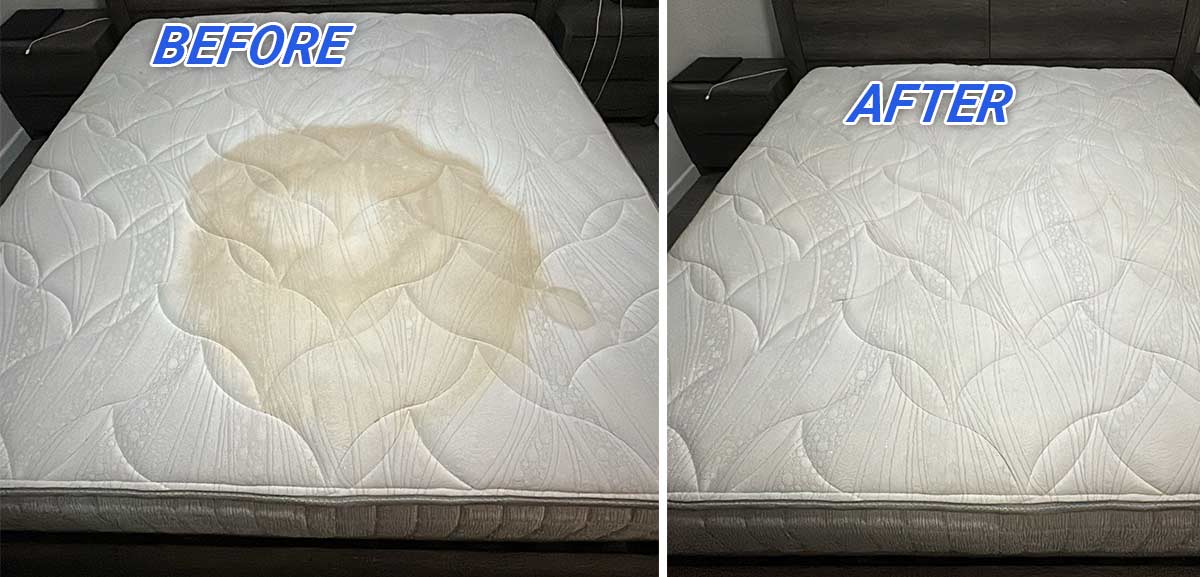
You can remove yellow stains from a mattress using hydrogen peroxide, dish soap, and baking soda for organic stains like sweat and urine, or white vinegar and water for hard water and mineral-related yellowing. The correct method depends on what caused the stain. Sweat and body oil stains respond to one treatment. Urine stains require a different approach. Using the wrong method can set the stain permanently, so identifying the source before you start is essential.
Yellow stains on a mattress are normal. They are not a sign that you are unhygienic. Every person sheds skin cells, sweats, and produces body oils during sleep. Over time, these biological materials oxidize and turn yellow. The stains you see are the visible evidence of years of accumulated moisture and organic matter. The good news is that most yellow stains can be lightened or removed entirely. Let's walk through the exact methods for each type of yellow stain, what to avoid, and how to prevent them from returning.
First, Identify What Caused the Yellow Stain
The cleaning method that removes sweat stains will not work on urine stains. The method for urine stains may be overkill for light perspiration marks. Diagnose first.
Sweat and Body Oil Stains
These are the most common. They appear as overall yellowing across the sleeping area, often darker where your torso and head rest. The stains have no strong odor beyond a slightly stale smell. The fabric may feel slightly stiff or greasy in heavily affected areas.
Urine Stains
These are usually concentrated in a specific area, not spread across the whole sleeping surface. They often have a visible outer ring with a lighter center. There may be a detectable ammonia smell, especially when the mattress is damp or the room is humid. Old urine stains can be very dark yellow or brownish.
Vomit Stains
These tend to be irregular in shape and may have visible food particles or an acidic smell. Vomit contains stomach acid and partially digested food, which means both protein-based and acid-based staining is present.
Water or Moisture Stains
If your mattress got wet from a spill, a leak, or high humidity, the yellow stains may be from water-soluble compounds in the mattress materials wicking to the surface. These are often lighter in color and may have a musty rather than body-related odor.
Age-Related Oxidation
Even a mattress that has never been directly soiled will yellow over time. The foam and fabric materials oxidize with exposure to air and light. This is a uniform yellowing, not a stain pattern. It is cosmetic and does not indicate a hygiene problem, though cleaning can still improve the appearance.
Method 1: Hydrogen Peroxide, Dish Soap, and Baking Soda Paste for Sweat and Body Oil Stains
This is the most effective DIY method for the yellow stains caused by sweat, body oils, and dead skin cells. It combines an oxygenating agent, a degreaser, and a mild abrasive.
What You Need
- 3% hydrogen peroxide
- Liquid dish soap, not dishwasher detergent, the kind you use for hand-washing dishes
- Baking soda
- A small bowl
- A spoon for mixing
- Clean white cloths
- A spray bottle, optional but helpful
- A vacuum with upholstery attachment
- A fan or dehumidifier for drying
Step 1: Mix the Cleaning Paste
In the bowl, combine half a cup of hydrogen peroxide, two tablespoons of baking soda, and two to three drops of liquid dish soap. Stir until it forms a loose paste. It will fizz slightly. That is the hydrogen peroxide reacting with the baking soda. The reaction is normal and helps lift the stain.
Step 2: Apply the Paste to the Stains
Apply the paste directly to the yellow stains. Use the spoon to spread it in a thin, even layer. Do not rub it in aggressively. You want the paste to sit on the surface so the hydrogen peroxide can penetrate the stain. Cover the entire stained area. The paste should be about an eighth of an inch thick.
Step 3: Let It Sit
Allow the paste to dry completely on the mattress. This usually takes 2 to 4 hours depending on room temperature and humidity. As it dries, the paste will crust over and may look chalky white. The hydrogen peroxide oxidizes the organic compounds in the stain. The baking soda absorbs oils and odors. The dish soap breaks down grease.
Step 4: Remove the Dried Paste
Once fully dry, scrape off the crusted paste with a spoon or a dull knife. Be gentle. You are not digging into the mattress fabric. Then vacuum the area thoroughly with the upholstery attachment. Make multiple passes to remove all the baking soda residue. Any remaining powder will feel gritty when you sleep on the mattress.
Step 5: Assess and Repeat if Necessary
Inspect the stained area. Significant lightening should be visible. If the stain is lighter but still present, you can repeat the process. Very old or heavy stains may require two or three treatments.
Method 2: Enzymatic Cleaner for Urine Stains
Yellow urine stains require an enzymatic cleaner. This is not optional. Standard cleaners, even the hydrogen peroxide paste above, may not fully break down the uric acid crystals that cause both the color and the odor.
Why Enzymatic Cleaner Is Necessary
Urine contains uric acid, urea, and other organic compounds. When urine dries, the water evaporates but the uric acid crystallizes. These crystals are not water-soluble. Water-based cleaners, soap, vinegar, and even hydrogen peroxide do not dissolve them. Enzymatic cleaners contain bacteria and enzymes that consume the uric acid and other organic waste, breaking them down at a molecular level.
How to Apply Enzymatic Cleaner
Blot any fresh urine first if the accident just happened. If the stain is old and dry, proceed directly to the cleaner.
Apply the enzymatic cleaner to the stain. You must saturate the area enough that the cleaner reaches the same depth the urine reached. For a pillow top or thick mattress, this may require more product than you expect. Follow the product label for dwell time. Some products require 15 minutes. Others recommend covering the area with plastic wrap and waiting 12 to 24 hours to prevent evaporation before the enzymes finish working.
After the dwell time, blot excess moisture with clean cloths. Dry the mattress completely with fans and a dehumidifier as described later.
What to Expect
Enzymatic cleaners do not produce the instant visual change that hydrogen peroxide does. The stain may not look immediately different. The enzymes work over time. The color lightens as the organic compounds are broken down. The odor is eliminated, which is often the more important outcome.
Method 3: White Vinegar and Water for Water Stains and Mineral Deposits
If the yellow stains are from water, a spill of clean water, a humidifier that soaked the mattress, or condensation, rather than from body fluids, the yellowing may be from minerals in the water or from compounds in the mattress foam wicking to the surface.
How to Apply Vinegar Solution
Mix equal parts white vinegar and cool water in a spray bottle. Lightly mist the stained area. Do not soak the mattress. You want the surface damp, not wet. Blot with a clean white cloth. The mild acidity of the vinegar helps dissolve mineral deposits and can lighten water-related discoloration.
Blot with a second cloth dampened with plain water to rinse. Blot with a dry cloth to remove moisture. Dry the mattress completely.
Vinegar has a strong smell of its own. The smell dissipates as the vinegar dries. Expect the room to smell like vinegar for several hours. The odor will be gone once the mattress is dry.
Method 4: Lemon Juice and Salt for Small Targeted Stains
For small, stubborn yellow spots, the combination of citric acid and salt can be effective. This method is more aggressive and should be tested on a hidden area first, as lemon juice can lighten fabric color.
Mix lemon juice with enough table salt to make a paste. Apply the paste to the stain. Place the mattress in direct sunlight if possible. Sunlight amplifies the bleaching effect of the lemon juice. Let the paste dry. Brush off the salt and vacuum the residue.
This method is best for small spots, not large areas. Do not use on dark-colored mattress fabric, as it may cause visible lightening.
Step 5: Drying the Mattress Completely
Every cleaning method involves moisture. The mattress must be completely dry before you put sheets back on. This is not a suggestion. It is the step that prevents mold.
Position a box fan to blow directly across the cleaned area. Open windows to create airflow. Run a dehumidifier in the room set to 30 to 40 percent humidity. Allow at least 4 to 8 hours of drying time. Test dryness by pressing a dry paper towel firmly onto the mattress surface. If the towel feels cool or shows any moisture, the mattress is not dry inside. Continue airflow.
Do not use a hair dryer or heat gun. Direct heat can damage mattress foam and fabric. Air movement and low humidity are safer and effective.
What Not to Use on Yellow Mattress Stains
Several common cleaning suggestions will damage your mattress or make stains worse.
Chlorine bleach. Bleach damages fabric fibers and foam. It can permanently discolor the mattress cover. The fumes are unhealthy to breathe during sleep. Bleach does not remove the organic compounds that cause yellow stains. It may whiten the surface temporarily while leaving the source material intact.
Hot water. Hot water sets protein-based stains like sweat and urine. It essentially cooks the protein into the fabric. Always use cool or cold water for biological stains.
Steam cleaners. Consumer steam cleaners inject moisture deep into the mattress and do not extract it effectively. The heat can damage foam. The residual moisture can cause mold. Avoid steam on mattresses.
Vinegar and baking soda together as a fizzing reaction. The fizzing reaction between vinegar and baking soda is visually satisfying but chemically pointless for cleaning. The reaction produces carbon dioxide gas and water. It neutralizes both the acid and the base, leaving you with salt water. Use them separately for their individual properties, not combined.
Ammonia. Ammonia is too harsh for mattress materials and can damage foam. The fumes are dangerous in an enclosed bedroom.
Preventing Yellow Stains from Returning
You have cleaned the stains. Now keep them from coming back.
Use a Waterproof Mattress Protector
A quality mattress protector is the single most effective prevention tool. It blocks sweat, body oils, and urine from reaching the mattress. Look for a protector labeled waterproof and breathable. Wash it monthly. Replace it when it shows wear or delamination.
Wash Bedding Weekly
Sheets, pillowcases, and mattress protector absorb the sweat and skin cells that would otherwise stain the mattress. Wash them in hot water, at least 130 degrees Fahrenheit, to kill dust mites and remove oils effectively.
Shower Before Bed When Possible
Going to bed clean reduces the amount of sweat, oil, and skin cells that transfer to the bedding and mattress. This is especially helpful in summer or for people who tend to sweat heavily at night.
Use a Mattress Pad in Addition to a Protector
A quilted mattress pad on top of the waterproof protector adds an extra absorbent layer. The pad is easier to wash than the mattress and provides a sacrificial layer that takes the brunt of nightly sweat.
Vacuum the Mattress Regularly
Vacuum the bare mattress every one to two months when you change the bedding. This removes the dust, skin cells, and dust mite matter that contribute to yellowing and odor over time.
When the Stains Will Not Come Out
Some yellow stains are permanent. Accepting this saves you from overwetting your mattress with repeated cleaning attempts.
Stains that have oxidized for many years, especially on older mattresses, may have chemically bonded with the fabric. The color change is not a surface deposit. It is a chemical alteration of the fabric or foam material itself. Cleaning will not reverse this.
If you have cleaned the stain twice with the appropriate method and seen no improvement, the stain is likely permanent. At that point, your choices are to live with it, cover it with a mattress protector, or replace the mattress if the cosmetic issue bothers you.
A mattress protector hides the stain completely. If the mattress is otherwise clean, odor-free, and structurally sound, covering it is a perfectly reasonable solution. You sleep on the protector and sheets, not directly on the mattress.
Frequently Asked Questions
Can I use hydrogen peroxide on a colored mattress?
Hydrogen peroxide has a mild bleaching effect. On white or light-colored mattress fabric, this is usually fine and may even be desirable. On dark or brightly colored fabric, test on a hidden area first. Apply a small amount, wait 15 minutes, and blot. If the color has lightened, do not use hydrogen peroxide on visible areas. Use enzymatic cleaner instead.
How do I remove yellow stains from a memory foam mattress?
Memory foam is especially sensitive to moisture. Use the hydrogen peroxide paste method but apply it sparingly. Do not saturate memory foam. The paste approach applies less free liquid than a spray method, which is safer for foam. Ensure the mattress dries completely. Memory foam holds moisture longer than other mattress types.
Will baking soda alone remove yellow stains?
No. Baking soda absorbs odors and some oils but does not have the oxidizing or enzymatic action needed to break down the compounds that cause yellow color. It is a helpful component of cleaning, not a standalone stain remover.
Are yellow stains on a mattress harmful?
Yellow stains from sweat and body oils are not harmful in themselves. They are cosmetic. However, they indicate the presence of organic material that feeds dust mites. The dust mite droppings are allergens that can trigger asthma and allergy symptoms. Cleaning the stains removes the food source for dust mites, which improves the hygiene of the sleep environment.
Can professional cleaning remove old yellow stains?
Professional mattress cleaners use hot water extraction with higher temperatures and stronger vacuum than consumer equipment, along with commercial-grade cleaning agents. They can often remove or significantly lighten stains that DIY methods cannot. This is worth trying for an expensive mattress with years of useful life remaining. Expect to pay $75 to $150 for a professional mattress cleaning.
Will yellow stains void my mattress warranty?
Many mattress warranties require the mattress to be free of stains for a claim to be honored. Stains indicate the mattress was not properly protected. If you have significant yellowing and plan to file a warranty claim for sagging or a defect, clean the mattress first and hope the stains lighten. In the future, use a protector from day one of a new mattress.
Key Takeaways
Yellow mattress stains are caused by sweat, body oils, urine, or oxidation of the materials. The most effective DIY treatment for sweat and oil stains is a paste of hydrogen peroxide, baking soda, and dish soap, applied, dried, and vacuumed off. For urine stains, enzymatic cleaner is mandatory because uric acid crystals resist water-based cleaning methods.
The two universal rules are to use the correct cleaner for the stain type and to dry the mattress completely before putting bedding back on. Overwetting a mattress while attempting to clean it creates a mold problem that is worse than the original stain.
Prevention is straightforward. A waterproof mattress protector blocks the moisture and oils that cause yellowing. Weekly bedding washes remove the source material before it reaches the mattress. Regular vacuuming reduces the debris that feeds dust mites.
If you have cleaned the stains twice with no result, they are likely permanent. Cover them with a quality mattress protector and move on. The mattress beneath is clean. The color is cosmetic. You sleep on the protector, not the stain.