
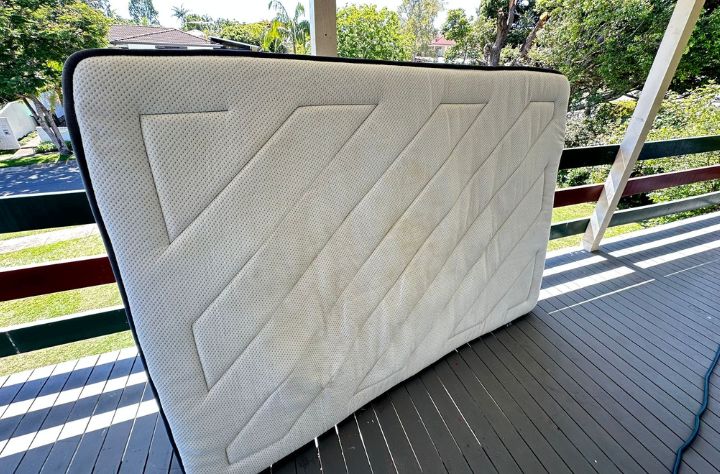
You should have your mattress professionally cleaned at least once every 12 to 18 months. This is the general recommendation from cleaning industry standards organizations and mattress manufacturers. If you have allergies, asthma, pets that sleep on the bed, or young children who have nighttime accidents, increase the frequency to every 6 to 12 months. A single professional cleaning removes the accumulated dead skin cells, dust mites, bacteria, and body oils that regular vacuuming and spot cleaning cannot reach.
You spend roughly one-third of your life on your mattress. Over time, your mattress collects more than just memories of good sleep. It absorbs sweat, dead skin, dust mites, and allergens. You wash your sheets weekly. You probably vacuum your mattress occasionally. But none of that replaces a deep professional cleaning. Let's walk through why the timing matters, what happens if you wait too long, what professional cleaning actually involves, and how to decide when to schedule your next service.
Why Your Mattress Needs Professional Cleaning
Your mattress gains weight over its lifespan. Not from magic. From you.
The average adult sheds about 1.5 grams of dead skin cells per day, according to research published in dermatology literature. Much of that ends up in your bed. Dust mites feed on those skin cells. A single mattress can host between 100,000 and 10 million dust mites at any given time, based on studies from the American College of Allergy, Asthma and Immunology. Dust mite droppings and body fragments are among the most common indoor allergens.
Then there is moisture. The average person loses between 200 milliliters and one liter of sweat per night, depending on body size, room temperature, and bedding. That moisture soaks into the mattress. It does not evaporate quickly from deep inside the foam or fiber layers. Add body oils, skincare products, pet dander, and the occasional spilled drink or child's accident, and your mattress becomes a complex biological environment.
Professional cleaning extracts what your vacuum cleaner leaves behind. It sanitizes beyond the surface. The result is a mattress that smells fresh, triggers fewer allergy symptoms, and lasts longer before needing replacement.
Recommended Professional Cleaning Schedule by Household Type
| Household Situation | Recommended Cleaning Frequency |
|---|---|
| One or two adults, no pets, no allergies | Every 12 to 18 months |
| Adults with mild seasonal allergies | Every 12 months |
| Household with pets that sleep on the bed | Every 6 to 12 months |
| Young children in the home, occasional accidents | Every 6 to 12 months |
| Diagnosed dust mite allergy or asthma | Every 6 months |
| Recent illness, bed bug treatment, or major spill | Immediate, regardless of schedule |
| Mattress used by a renter or previous owner | Clean before first use |
These are guidelines. Your mattress tells you when it needs cleaning if you pay attention. We will cover the visual and sensory signs shortly.
What Happens Inside Your Mattress Over Time
Understanding the timeline helps you appreciate why annual or semi-annual cleaning matters.
Month 1 to 6 after cleaning or purchase. You are sleeping on a relatively clean surface. Dust mite populations are low. Allergen accumulation is minimal. Regular vacuuming every month or two is sufficient.
Month 6 to 12. Dust mite populations have established. Body oil and sweat have penetrated the top layers of the mattress. You may notice a slight yellowing on light-colored mattress fabric, especially where you sleep. This is oil and moisture oxidation. A professional cleaning resets this buildup.
Month 12 to 24. Dust mite allergen concentrations can reach levels that trigger noticeable allergy symptoms in sensitized individuals, according to studies on indoor allergen exposure. The mattress may have a detectable odor, especially in humid climates. Stains from sweat, drool, or accidents are set.
Beyond 24 months. The mattress has accumulated significant biological material. The average mattress gains several pounds over its first few years from dead skin and dust mite matter alone. Odors are noticeable. Allergy symptoms may worsen at night or upon waking. Cleaning is overdue.
Signs Your Mattress Needs Cleaning Now
You do not need to wait for an arbitrary date on the calendar. Your mattress will tell you it is time.
- You wake up congested or sneezing, but symptoms improve after you leave the bedroom.
- Visible staining that did not come out with spot cleaning. Yellow or brown discoloration on the sleeping surface.
- Noticeable odor when you change the sheets. A musty, sour, or stale smell.
- Itchy skin or increased eczema symptoms that correlate with time spent in bed.
- Visible dust or debris in the seams or tufts of the mattress that vacuuming does not remove.
- You have not cleaned the mattress professionally in over two years.
- Someone in the household has been sick with a contagious illness, especially gastrointestinal or respiratory.
Any one of these signs justifies a professional cleaning. Multiple signs mean you have waited too long.
What Professional Mattress Cleaning Actually Involves
Knowing the process helps you evaluate service providers and understand what you are paying for.
Inspection
The technician examines the mattress for stains, damage, and fabric type. They identify problem areas and determine the appropriate cleaning method. Different mattress materials, memory foam, latex, innerspring with pillow top, require different approaches.
Pre-treatment
Stains are spot-treated with appropriate cleaning agents. Protein-based stains like sweat or urine get enzymatic treatment. Oil-based stains get solvent-based spotting. The technician should test any chemical in an inconspicuous area first.
Deep Extraction or Dry Cleaning
Most professional mattress cleaning uses one of two methods.
Hot water extraction, sometimes called steam cleaning even though actual steam is not always used. A cleaning solution is injected into the mattress surface under pressure and immediately extracted with powerful vacuum. This removes deep-seated dirt, oils, and allergens. The mattress will be damp afterward and needs several hours to dry.
Dry or low-moisture cleaning. A cleaning compound or foam is applied, agitated into the fabric, and then vacuumed out. This method uses minimal water. The mattress is dry within an hour or two. It is less effective for very deep cleaning but sufficient for maintenance cleaning on a mattress that is not heavily soiled.
Sanitization
After extraction, many services apply a sanitizing agent. This may be a hospital-grade disinfectant, a botanical antimicrobial, or ultraviolet light. UV-C light treatment is increasingly common and has been shown to reduce surface bacteria and dust mite allergens when applied at appropriate intensity and duration.
Deodorizing
A final treatment to neutralize residual odors. Quality services use enzymatic or oxidizing deodorizers, not heavy perfumes that mask odors without eliminating them.
Drying
For hot water extraction, the mattress needs 4 to 8 hours to dry completely, sometimes longer in humid conditions. The technician may set up air movers to speed drying. Do not put sheets back on a damp mattress. Trapping moisture promotes mold growth.
Professional Cleaning Versus What You Can Do at Home
Many homeowners wonder whether professional cleaning is worth it or whether thorough DIY maintenance is sufficient.
| Task | DIY Effectiveness | Professional Effectiveness |
|---|---|---|
| Surface dust and debris removal | Good with HEPA vacuum | Excellent, stronger equipment |
| Dust mite allergen reduction | Moderate, vacuuming reduces surface allergens | Significant, extraction reaches deeper layers |
| Stain removal | Moderate, depends on stain age and type | Good to excellent with professional spotting agents |
| Odor removal | Low to moderate, baking soda helps but does not remove deep odors | Good, extraction removes the source material |
| Bacteria and pathogen reduction | Low, vacuuming does not kill bacteria | High with sanitizing agents or UV treatment |
| Moisture extraction after spills | Poor, surface blotting cannot reach soaked-in liquid | Good, extraction pulls liquid from deep within |
| Overall deep cleaning | Surface only | Penetrates top layers of mattress |
DIY maintenance is essential for the months between professional cleanings. Vacuum your mattress with a HEPA-filter vacuum every one to two months. Spot-clean spills immediately. Use a mattress protector. But DIY cannot replace professional extraction any more than vacuuming your living room carpet replaces periodic deep cleaning.
How to Choose a Mattress Cleaning Service
Not all services are equal. Here is what to look for and what questions to ask.
Cleaning Method
Ask which method they use and why. A reputable company will explain their approach based on your mattress type. If they cannot explain the difference between hot water extraction and low-moisture cleaning, keep looking.
Products Used
If anyone in your household has allergies, asthma, or chemical sensitivities, ask about cleaning products. Many companies offer hypoallergenic or fragrance-free options. Avoid companies that refuse to disclose what chemicals they use.
Drying Time
Ask how long the mattress will take to dry and whether they provide air movers. A professional company will give you a realistic drying time and instructions for aftercare.
Reviews and References
Read reviews that specifically mention mattress cleaning, not general carpet cleaning. Mattress cleaning requires different equipment and training. A great carpet cleaner is not automatically a great mattress cleaner.
Cost
Professional mattress cleaning typically costs between $75 and $150 for a standard mattress. Larger mattresses, heavily soiled mattresses, or additional services like stain protection application cost more. Be wary of prices below $50. That price point often means a surface-level treatment with no meaningful extraction.
What You Should Do Between Professional Cleanings
Professional cleaning is the reset. What you do between cleanings determines how quickly the mattress gets dirty again.
Use a quality mattress protector. A waterproof, breathable mattress protector is the single best investment you can make for mattress longevity. It blocks moisture, skin cells, and dust mites from entering the mattress. Wash it monthly.
Vacuum the mattress every one to two months. Use the upholstery attachment and a vacuum with a HEPA filter. Pay attention to seams, tufts, and edges where debris collects.
Wash bedding weekly in hot water. The Asthma and Allergy Foundation of America recommends washing sheets and pillowcases in water at least 130 degrees Fahrenheit to kill dust mites. This temperature is hotter than most home water heaters are set by default, so check your settings.
Address spills immediately. Blot liquids with clean cloths. Do not rub. Use cold water or an enzymatic cleaner for bodily fluids. Never saturate the mattress. Excess moisture that cannot be extracted creates a mold risk.
Rotate your mattress. Rotating every 3 to 6 months evens out wear and compression. Some manufacturers also recommend flipping if the mattress is double-sided, though most modern mattresses are single-sided.
Risks of Skipping Professional Cleaning
If you never have your mattress professionally cleaned, several things happen. None are good.
Increased allergen load. Dust mite populations grow unchecked. Allergen concentrations rise. For allergy and asthma sufferers, this means more symptoms, more medication, and poorer sleep quality. Poor sleep has well-documented negative effects on immune function, cognitive performance, and mood.
Accelerated mattress aging. Body oils and moisture break down foam and fiber materials over time. A mattress that could last 10 years with proper care may need replacement at 7 years when neglected. The $100 to $150 annual cleaning cost is trivial compared to replacing a $1,000 to $3,000 mattress prematurely.
Persistent odors. The stale smell that develops in old mattresses is not just unpleasant. It is the off-gassing of biological decomposition and bacterial activity. You may become nose-blind to it, but guests will notice.
Hygiene concerns. A mattress that has absorbed years of sweat, drool, and skin cells is not a clean sleep environment. This matters for general health, skin health, and peace of mind.
How Often to Replace Versus Clean
Professional cleaning extends mattress life but does not make a mattress last forever. The National Sleep Foundation recommends replacing your mattress every 7 to 10 years, depending on material quality and care.
Signs it is time to replace rather than clean:
- Visible sagging or body impressions that do not spring back
- Springs or coils that you can feel through the surface
- Waking up with back or joint pain that resolves after rising
- The mattress is over 10 years old regardless of appearance
- Damage to the structural integrity, torn cover, broken edge support
- You sleep better on other mattresses, hotel beds, guest rooms
If your mattress is nearing the end of its lifespan and is heavily soiled, put the cleaning money toward a new mattress and a quality protector from day one.
Special Considerations for Specific Situations
Bed Bug Treatment
If you have had professional bed bug treatment, the chemicals or heat treatment may leave residues in the mattress. Schedule a cleaning after the treatment's recommended waiting period. Confirm with both your pest control provider and your mattress cleaner that the methods are compatible.
Memory Foam and Latex Mattresses
These materials are more sensitive to moisture than traditional innerspring mattresses. Excess water from hot water extraction can damage foam if not extracted properly. Choose a service with experience cleaning foam mattresses. Low-moisture cleaning is often the safer choice for these materials.
Infants and Toddlers
A mattress used by a child who has nighttime accidents should be cleaned more frequently. Urine and vomit penetrate quickly and deeply. Even if the surface looks clean after spot treatment, the interior may harbor bacteria and odor. Clean at least every 6 months during the potty-training years.
Rental and Previously Owned Mattresses
If you move into a furnished rental or purchase a used mattress, have it professionally cleaned before you sleep on it. You do not know what the previous user's hygiene habits were, whether they used a protector, or what spills and accidents occurred. This is a non-negotiable health precaution.
Frequently Asked Questions
Can I steam clean my mattress myself with a home machine?
Home carpet and upholstery cleaners can help with surface cleaning but lack the power of professional equipment. They also tend to leave more moisture in the mattress because the vacuum recovery is weaker. Excess residual moisture promotes mold. If you use a home machine, do so on a hot, dry day with windows open and fans running. Expect drying to take 12 to 24 hours.
Does baking soda really clean a mattress?
Baking soda can absorb some surface odors and light moisture. It does not clean, sanitize, or extract anything from deep within the mattress. It is a temporary deodorizing aid, not a cleaning method. Sprinkling baking soda, letting it sit, and vacuuming it up is a useful maintenance step between professional cleanings. It is not a substitute for them.
Will professional cleaning remove all stains?
Professional cleaning removes many stains but cannot guarantee removal of all stains. Old, set-in stains, especially those that have chemically altered the fabric dye like bleach or old urine, may not come out completely. A reputable cleaner will set realistic expectations during inspection.
How long after cleaning can I sleep on the mattress?
For hot water extraction, wait until the mattress is completely dry. This is typically 4 to 8 hours but can be longer in humid conditions. For low-moisture cleaning, the mattress is often ready within 1 to 2 hours. Your technician will advise specific drying times based on the method used and ambient conditions.
Is professional mattress cleaning safe for babies and pets?
Yes, when the cleaning products have fully dried and any volatile compounds have off-gassed. If you have concerns, ask the cleaning company to use hypoallergenic, fragrance-free, or plant-based cleaning solutions. Open windows and run a fan for several hours after cleaning before allowing babies or pets onto the mattress.
Does mattress cleaning kill dust mites?
Professional cleaning with hot water extraction at sufficient temperature can kill dust mites. Sanitizing agents and UV-C light treatment also reduce dust mite populations. However, dust mites reproduce quickly. The goal is population reduction, not permanent eradication. Regular cleaning keeps numbers at levels that minimize allergic response.
Key Takeaways
Professional mattress cleaning once every 12 to 18 months is the baseline recommendation for most households. Increase frequency to every 6 to 12 months if you have allergies, asthma, pets on the bed, or young children. The service costs $75 to $150 and involves deep extraction, stain treatment, sanitization, and deodorizing that your vacuum cleaner and spot cleaning cannot replicate.
Between professional cleanings, use a waterproof mattress protector, vacuum monthly with a HEPA vacuum, wash bedding weekly in hot water, and address spills immediately. These habits significantly extend the time between professional services and extend the overall life of your mattress.
If you have never had your mattress professionally cleaned and it is more than two years old, you are overdue. Schedule a cleaning. You will notice the difference in freshness, and your sinuses may thank you in the morning. The mattress is the most used piece of furniture in your home. Treat it accordingly.